Launch offer — valid today only

📄 Digital book in PDF · read it on your phone or print it

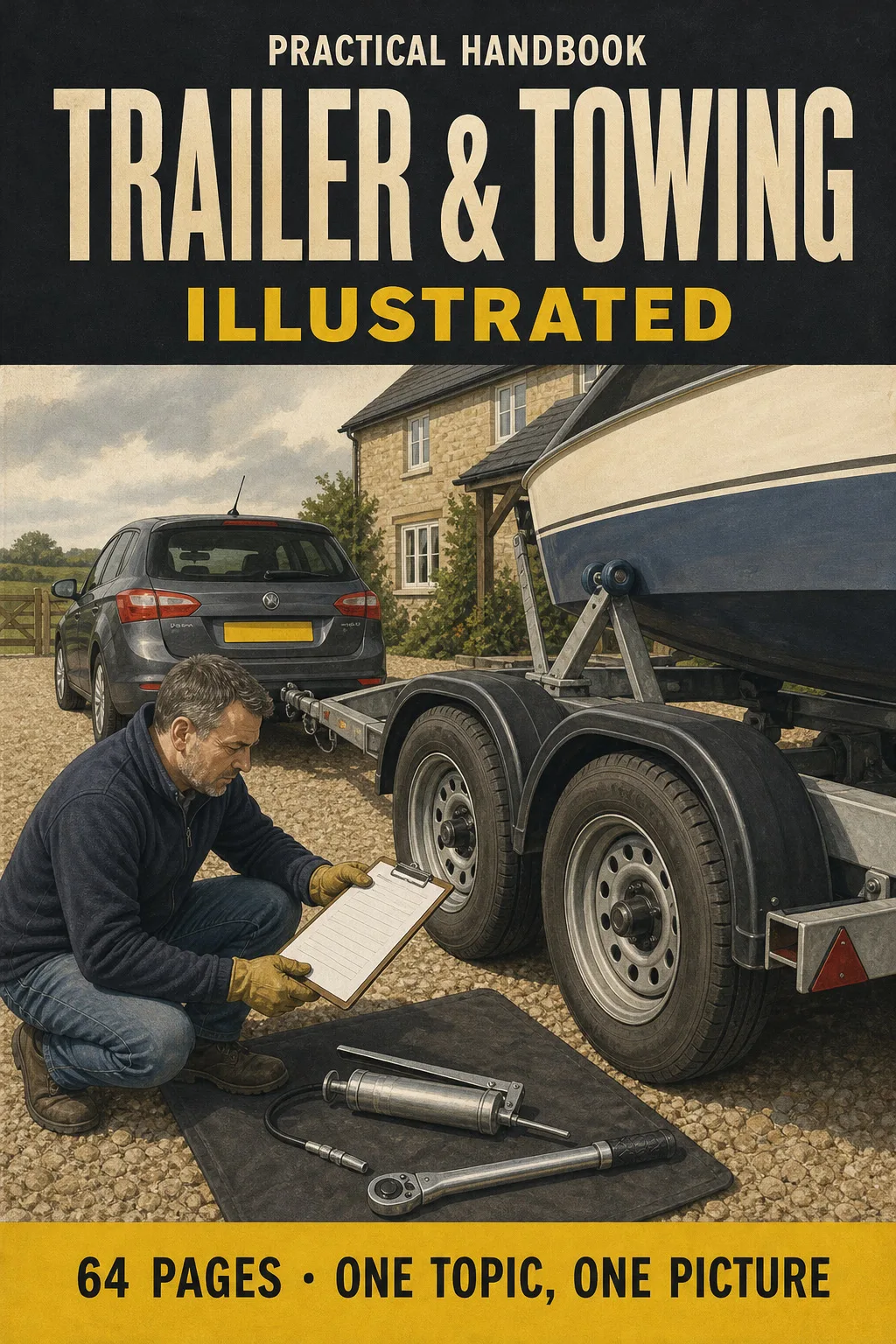
Trailer Care and UK Towing Rules in Drawings Every Check in the Same Order

Couplings, the breakaway cable, nose weight, wheel bearings, overrun brakes, tyres, wheel nuts and lights. Every topic has its own page: first the drawing, then what you need to remember. 64 illustrated pages.

I WANT EVERY TRAILER CHECK DRAWN

🔒 Secure checkout · PDF by email · 30-day guarantee

Every topic, its own pageEvery check drawn, with the explanation beside it
64 illustrated pages9 parts, from every part of a trailer to what a roadside check looks at
Up-to-date sourcesGOV.UK towing guidance, The Highway Code and DVSA guidance
PDF by emailFormat

Look Inside the Book

Every page has one large drawing and a box with the numbers and steps you need to know:

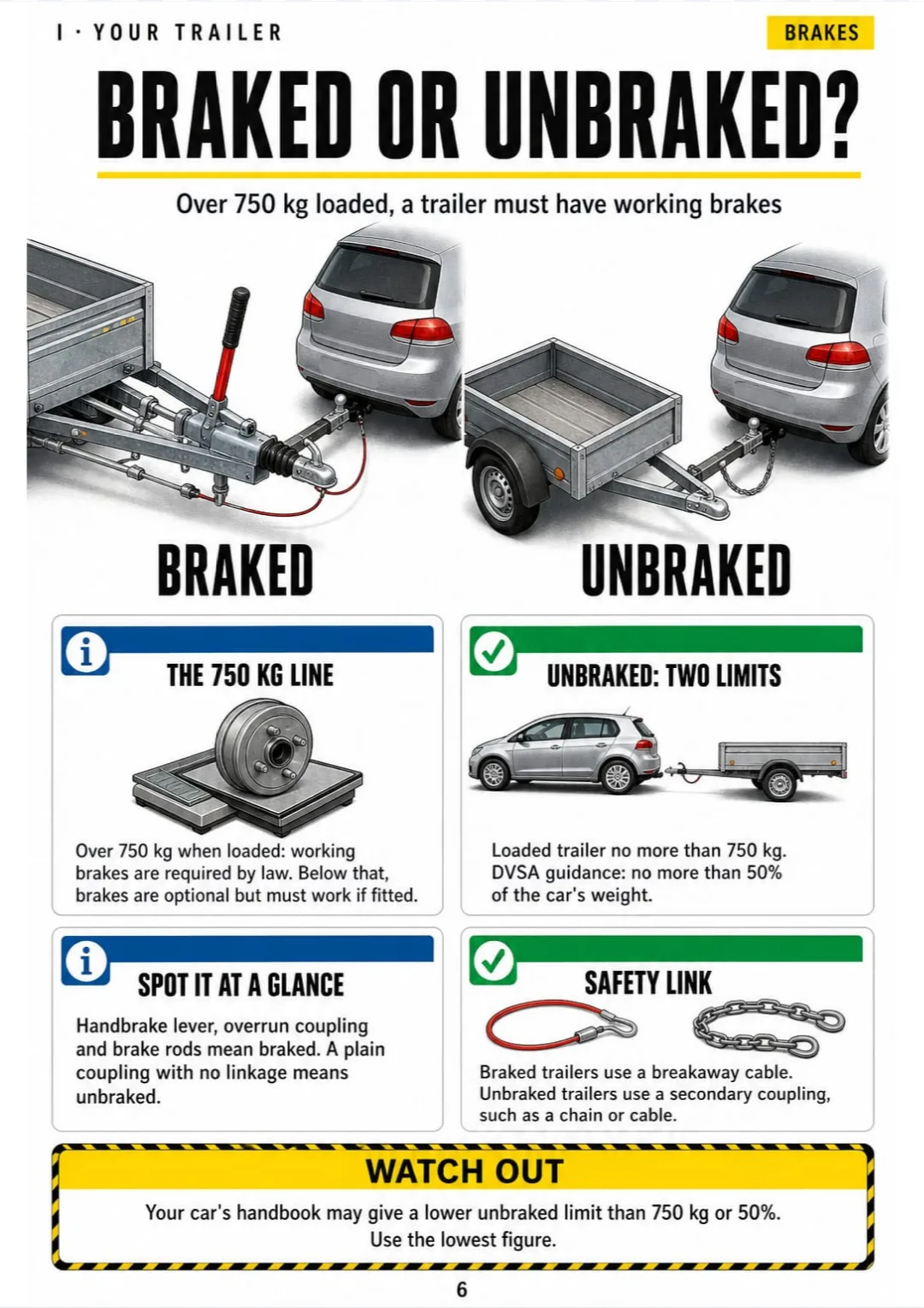
Braked vs unbraked side by side: the 750 kg rule and the 50% guidance.
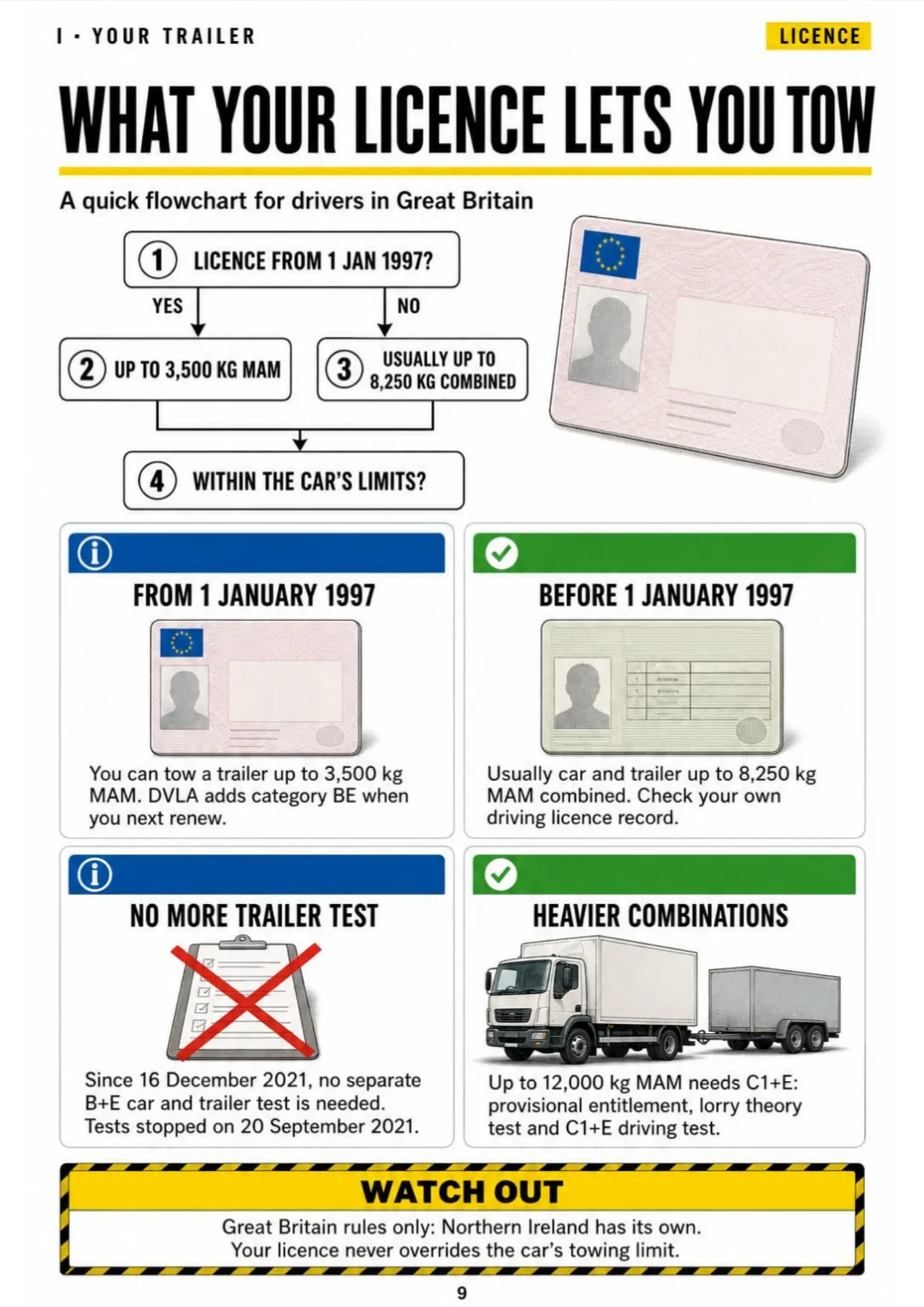
Licence from 1 January 1997: tow up to 3,500 kg MAM, no B+E test needed.
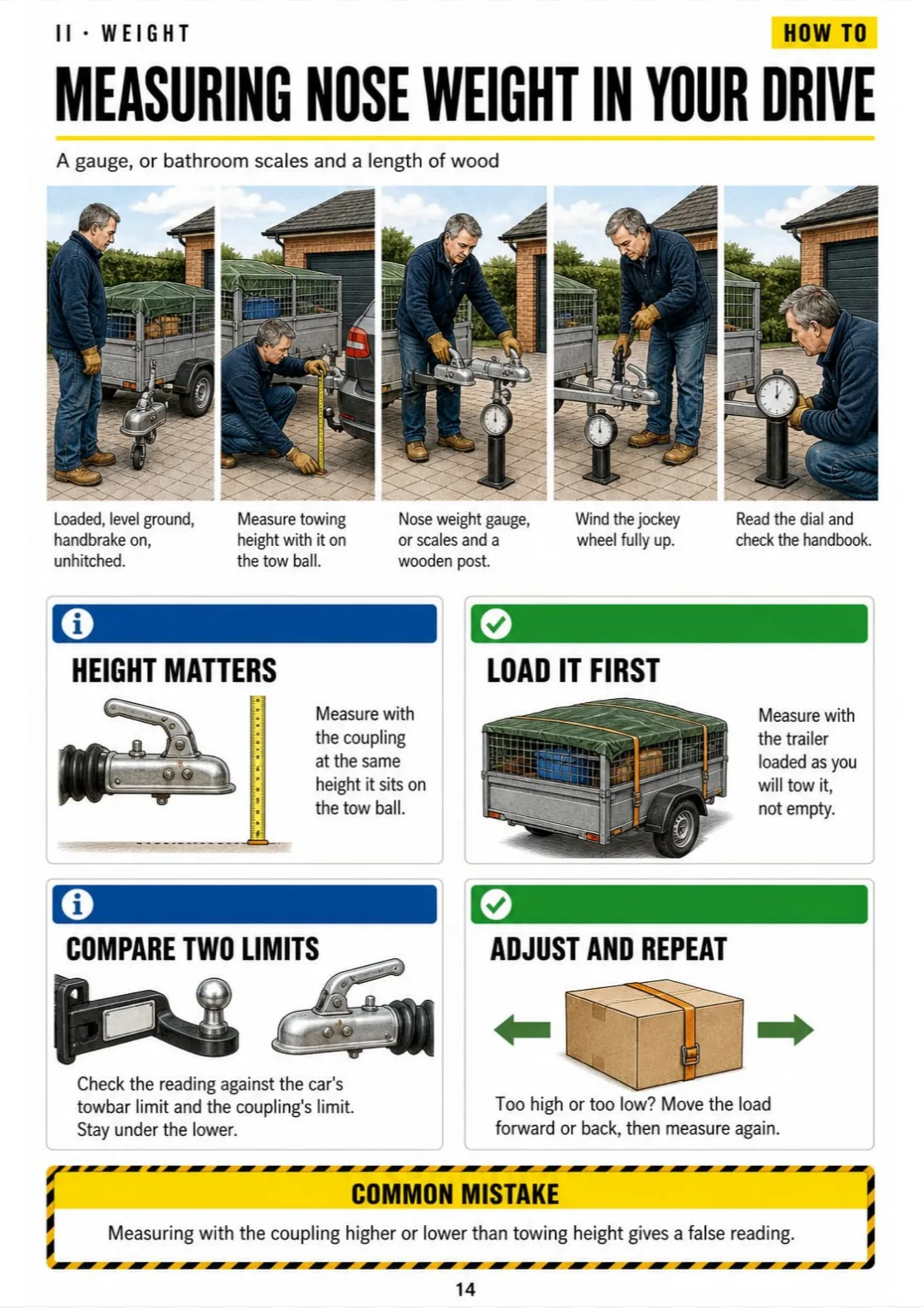
Five steps to measure nose weight at home, coupling at towing height
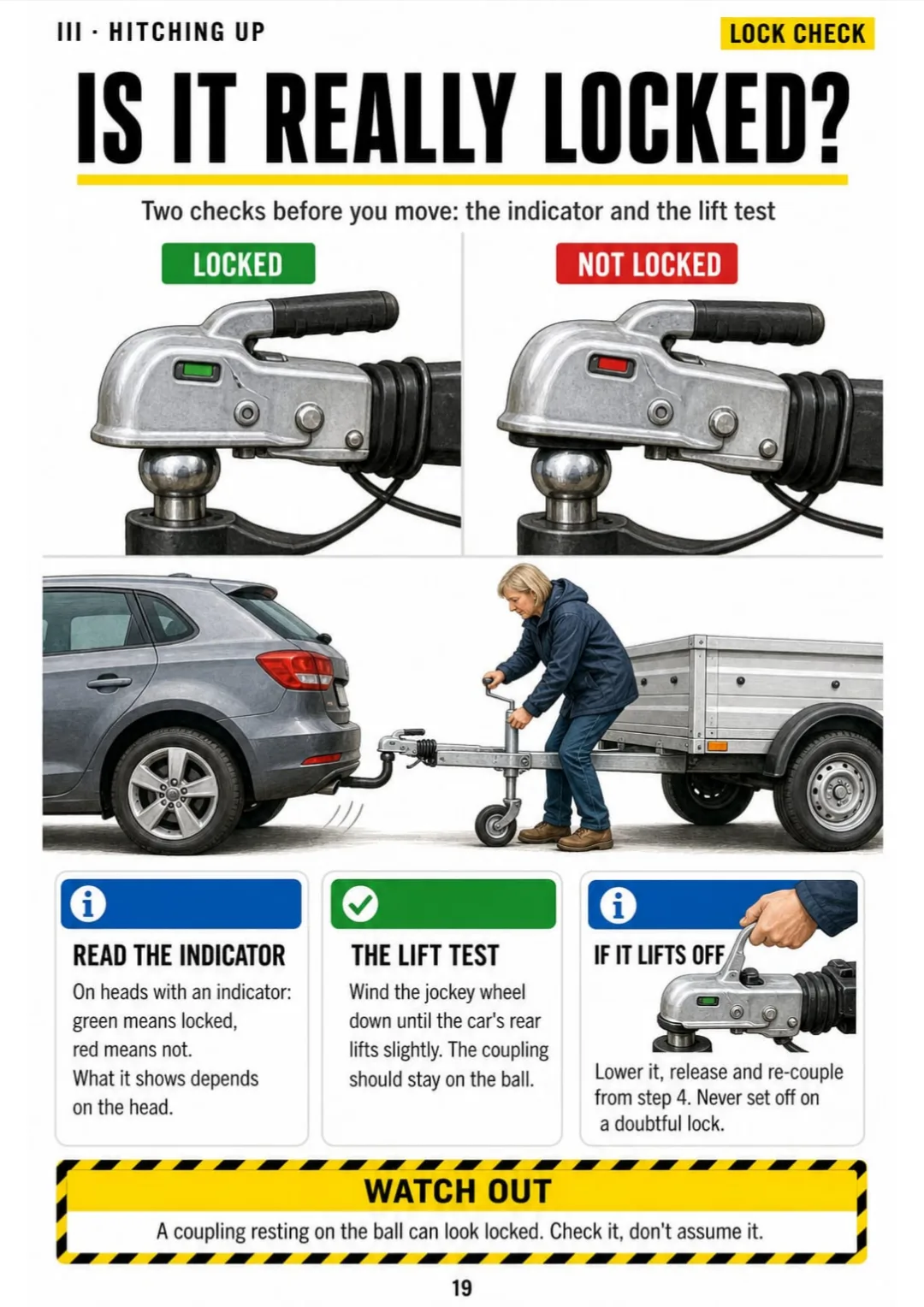
Green indicator plus a lift test: the coupling stays on the ball.
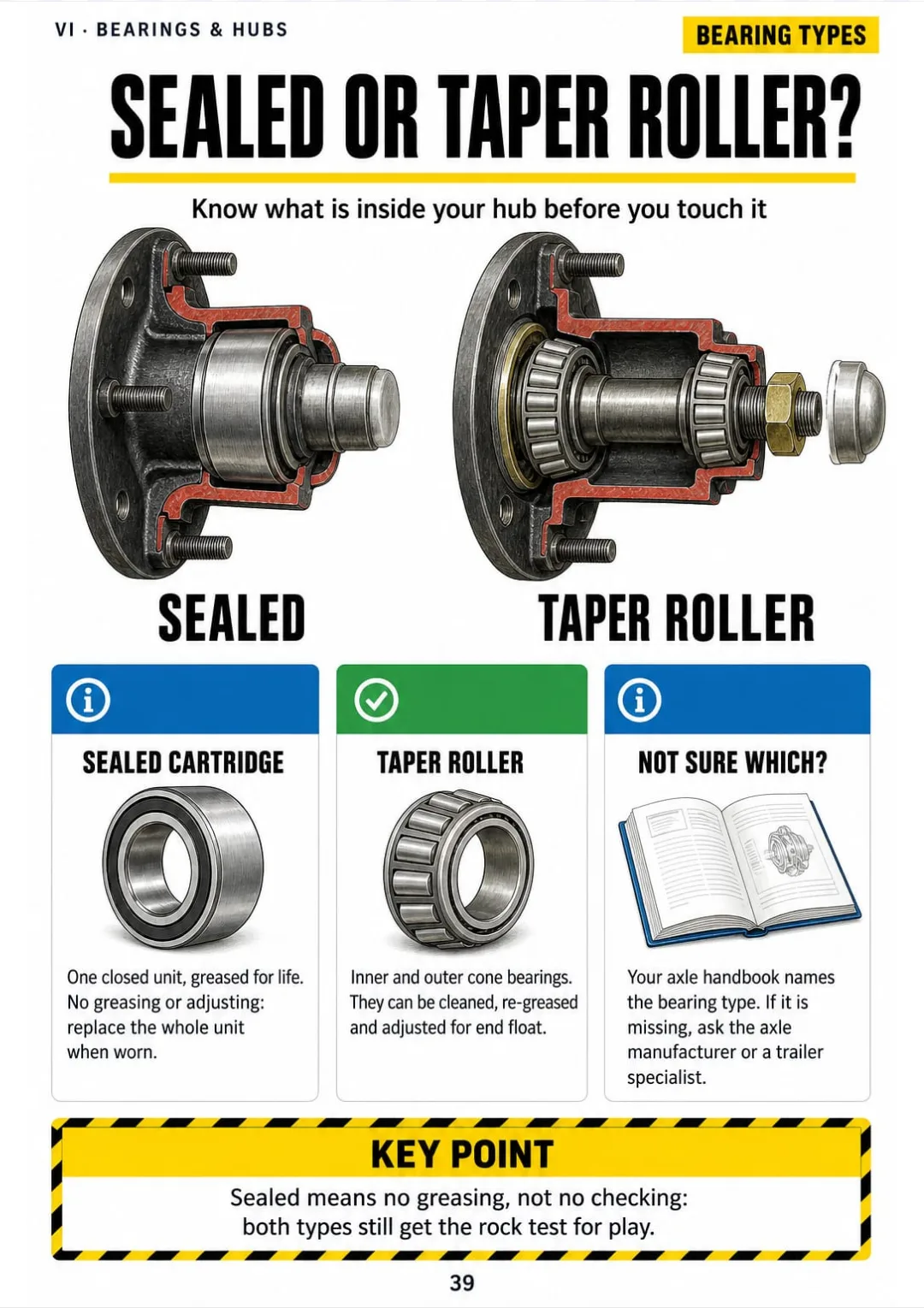
Sealed cartridge: replace when worn · Taper roller: greased and adjusted
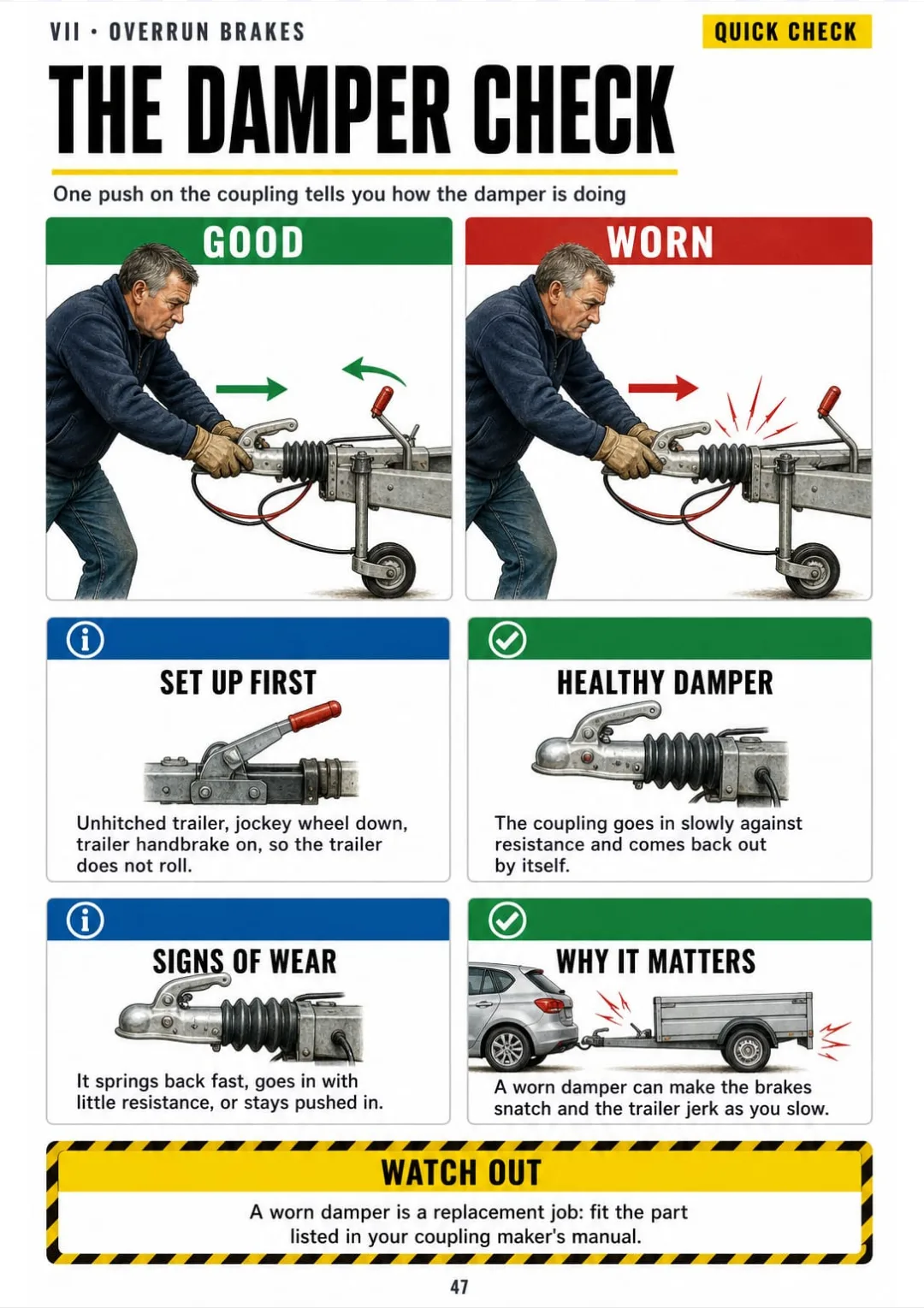
The damper push test: slow in and back out is good; fast or stuck is worn.
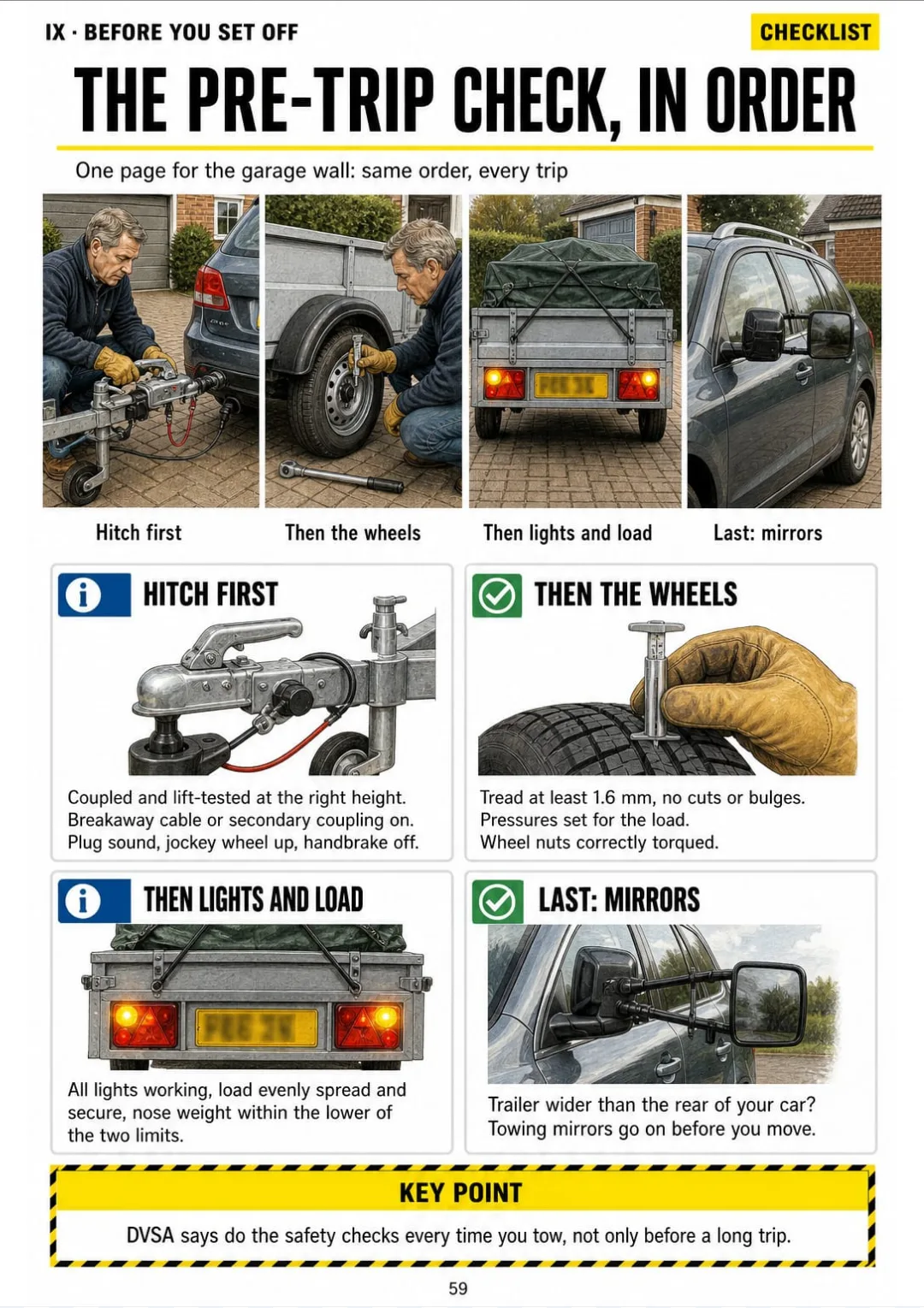
The pre-trip check in 8 steps: coupling to mirrors, same order every time
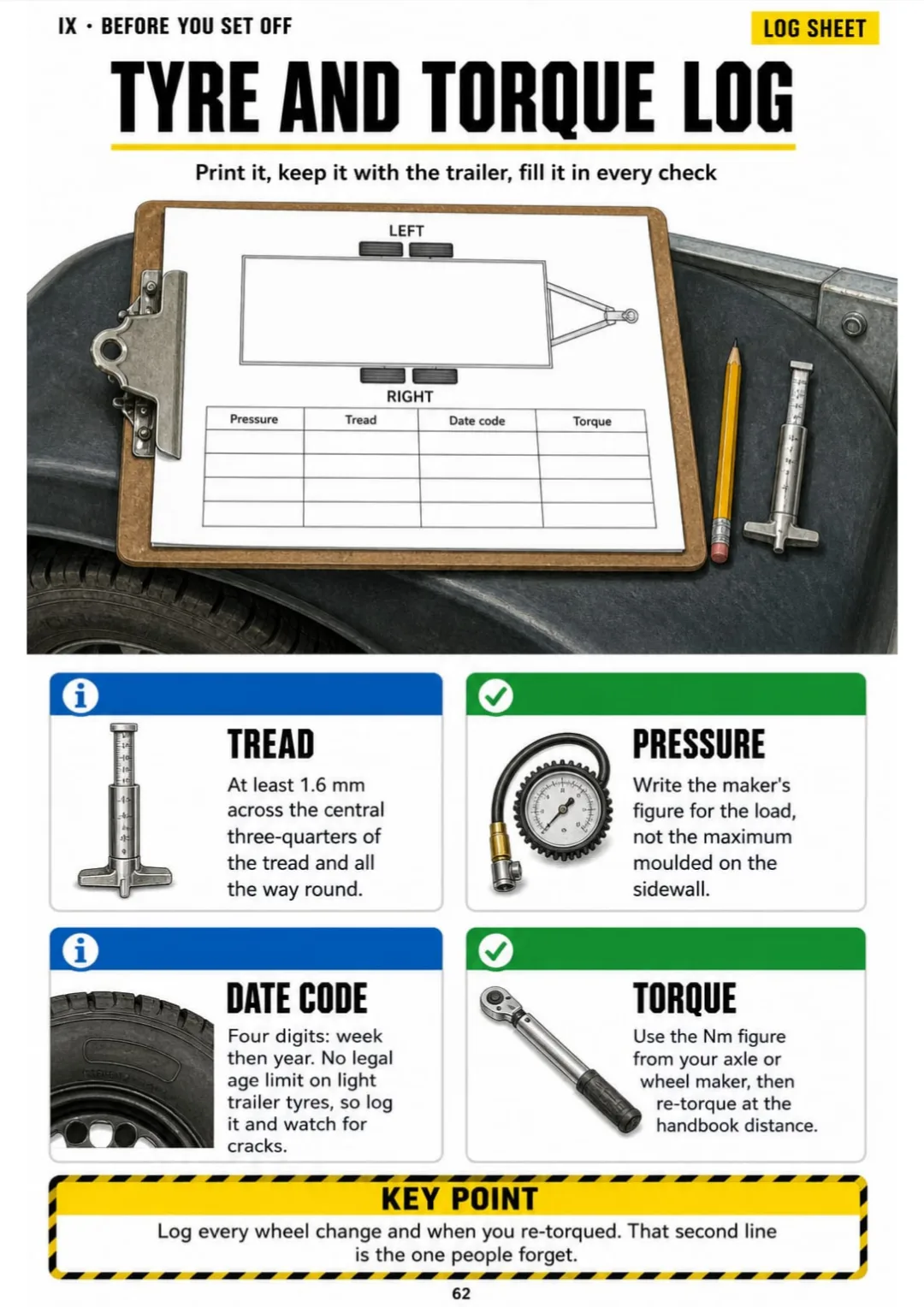
Fill-in log: date, wheel, pressure, tread, date code, torque and who checked

Swipe to see more →

These are real pages from the book. The table of contents is the full one: 9 parts and 60 topics.

The Problem Isn't You. It's How It Was Explained.

You're loading the trailer for Saturday and you stop at the drawbar: how much weight should actually be pressing down on the ball?

The manual gives you paragraphs on nose weight, coupling limits and stability. Nothing tells you which number wins, so you load it nose-heavy and hope for the best.

Five steps to measure nose weight at home, coupling at towing height

Here, nose weight is one page: an arrow pushing down on the ball, the two limits side by side and the lower one circled. Next to it, the snake it helps prevent.

The hitching routine, the breakaway cable, wheel bearings, overrun brakes and the pre-trip check each have their own page too.

You see it, it makes sense, and you load the trailer without going back to the manual.

COMPARE FOR YOURSELF

The Same Topic, Two Ways to Learn It

THIS
  • The manual: line after line
  • Speed limits and lanes explained only in words
  • You set off still unsure
Where a vehicle is drawing a trailer, the maximum permitted speed differs from that applicable to the same vehicle when travelling solo. On single carriageway roads, unless a lower limit is indicated, the applicable limit is 50 mph, whereas on dual carriageways and motorways the corresponding limit is 60 mph. Furthermore, a vehicle drawing a trailer may not use the right-hand lane of a motorway having three or more lanes, save where lanes are closed or otherwise restricted, as indicated by signage.
FOR THIS
  • The limits and lanes in one drawing
  • The numbers in a box
  • You see it and it makes sense
Licence from 1 January 1997: tow up to 3,500 kg MAM, no B+E test needed.
CONTENTS

Take a Look at the 9 Parts and 60 Topics

Your trailer named and labelled, weight and nose weight, hitching up, lights and plates, tyres and wheel nuts, wheel bearings, overrun brakes, trailer by trailer, and the pre-trip checklists: 64 pages, all illustrated.

IYour Trailer, Drawn and Labelled · pp. 5-10
  1. Every Part of a Trailer, Named
  2. Braked or Unbraked: Which Trailer Have You Got?
  3. The Plates: Where the Numbers Live
  4. The Four Weights You Need to Know
  5. What Your Licence Lets You Tow
  6. Speed Limits and Lanes When Towing
IIWeight and Nose Weight · pp. 11-16
  1. Reading Your Car's Towing Limit
  2. The 85% Guideline: Why It Exists
  3. Nose Weight: The Number That Stops the Snake
  4. Measuring Nose Weight in Your Drive
  5. Load Heavy Low and Over the Axle
  6. Signs You Are Overloaded
IIIHitching Up in the Same Order · pp. 17-24
  1. Coupling Heads: Know Your Type
  2. The Hitching Routine, Step by Step
  3. Is It Really Locked? The Lift Test
  4. The Breakaway Cable: Where It Goes
  5. Secondary Couplings on Unbraked Trailers
  6. Plugging In: 7-Pin and 13-Pin
  7. Jockey Wheel and Prop Stands Up
  8. Handbrake Off and the Final Walk Round
IVLights, Plates and Size Rules · pp. 25-30
  1. The Lights a Trailer Must Have
  2. Rear Fog Light and Marker Lights
  3. Number Plates on a Trailer
  4. Width, Length and Towing Mirrors
  5. Checking the Lights, Even on Your Own
  6. When a Light Will Not Work
VTyres and Wheel Nuts · pp. 31-38
  1. Tread Depth: 1.6 mm Is the Legal Minimum
  2. Reading the Sidewall
  3. How Old Is That Tyre? The Date Code
  4. Tyre Pressures: Cold, and From the Right Place
  5. Cracks, Bulges and Flat Spots
  6. Tightening Wheel Nuts in a Star
  7. Re-Torque After the First Miles
  8. The Spare Wheel and a Roadside Change
VIWheel Bearings and Hubs · pp. 39-45
  1. Sealed or Taper Roller: Which Bearings?
  2. Checking for Play: The 12 and 6 Rock
  3. The Hand-on-Hub Check After a Drive
  4. Greasing Taper Bearings
  5. Boat Trailers: Let the Hubs Cool Before Launching
  6. Signs a Bearing Is Failing
  7. Replacing a Bearing: The Overview
VIIOverrun Brakes · pp. 46-52
  1. How an Overrun Brake Works
  2. The Damper Check
  3. Adjusting the Brakes: Wheels First, Linkage Last
  4. The Handbrake: Does It Really Hold?
  5. The Reversing Mechanism
  6. Brake Shoes and Drums
  7. Cables, Rods and the Compensator
VIIITrailer by Trailer · pp. 53-58
  1. Boat Trailers: Rollers, Winch and Salt
  2. Horse Trailers: Floor, Ramp and Partitions
  3. Car Transporters: Ramps and Wheel Straps
  4. Plant Trailers: Heavy, Short and Often Near the Limit
  5. Laying Up a Trailer for Winter
  6. The First Trip After Winter
IXBefore You Set Off: Checklists and Mistakes · pp. 59-64
  1. The Pre-Trip Check, in Order
  2. Snaking: What to Do and What Not to Do
  3. The Annual Service You Can Do Yourself
  4. Tyre and Torque Log: Fill-In Sheet
  5. The Most Frequent Towing Mistakes
  6. What a Roadside Check Looks At

One Page, One Topic, All Clear

Think of it this way:

It's the first dry Saturday in March, the boat trailer has stood all winter and you need to know whether those bearings have play before you reach the motorway.

You open the bearings page and see the wheel drawn with your hands at 12 and 6, the rock you're feeling for, and sealed and taper roller bearings side by side.

Sealed cartridge: replace when worn · Taper roller: greased and adjusted

The same goes for the hitching routine, the breakaway cable, the overrun brake, nose weight and the tyre date code: each one on its own page.

Trailer & Towing Illustrated is 9 parts and 60 topics, all drawn, with the pre-trip check, the annual service and fill-in tyre and torque sheets at the end.

What you see drawn, you don't have to memorize.

What's Inside Trailer & Towing Illustrated:

Ipp. 5-10

Your Trailer, Drawn and Labelled

Every part of a trailer named, braked or unbraked, the plates, the four weights, licence rules and speed limits when towing.

IIpp. 11-16

Weight and Nose Weight

Your car's towing limit, the 85% guideline, nose weight, measuring it on your drive, loading low over the axle and the signs of overloading.

IIIpp. 17-24

Hitching Up in the Same Order

Coupling heads, the hitching routine step by step, the lift test, the breakaway cable, secondary couplings, 7-pin and 13-pin plugs and the final walk round.

IVpp. 25-30

Lights, Plates and Size Rules

The lights a trailer must have, fog and marker lights, number plates, width, length and towing mirrors, and checking lights on your own.

Vpp. 31-38

Tyres and Wheel Nuts

Tread depth, the sidewall, the date code, pressures, cracks and bulges, tightening wheel nuts in a star, re-torquing and the spare wheel.

VIpp. 39-45

Wheel Bearings and Hubs

Sealed or taper roller bearings, the 12 and 6 rock, the hand-on-hub check, greasing, letting boat hubs cool and the signs of a failing bearing.

VIIpp. 46-52

Overrun Brakes

How an overrun brake works, the damper check, adjusting wheels first and linkage last, the handbrake, the reversing mechanism, shoes, drums and cables.

VIIIpp. 53-58

Trailer by Trailer

Boat trailers, horse trailers, car transporters and plant trailers, plus laying up for winter and the first trip after it.

IXpp. 59-64

Before You Set Off: Checklists and Mistakes

The pre-trip check in order, what to do when it snakes, the annual service you can do yourself, the tyre and torque log, frequent mistakes and roadside checks.

At the end of the book: The pre-trip check in 8 steps, the annual service and fill-in tyre and torque sheets.
Plus: 2 Free Books

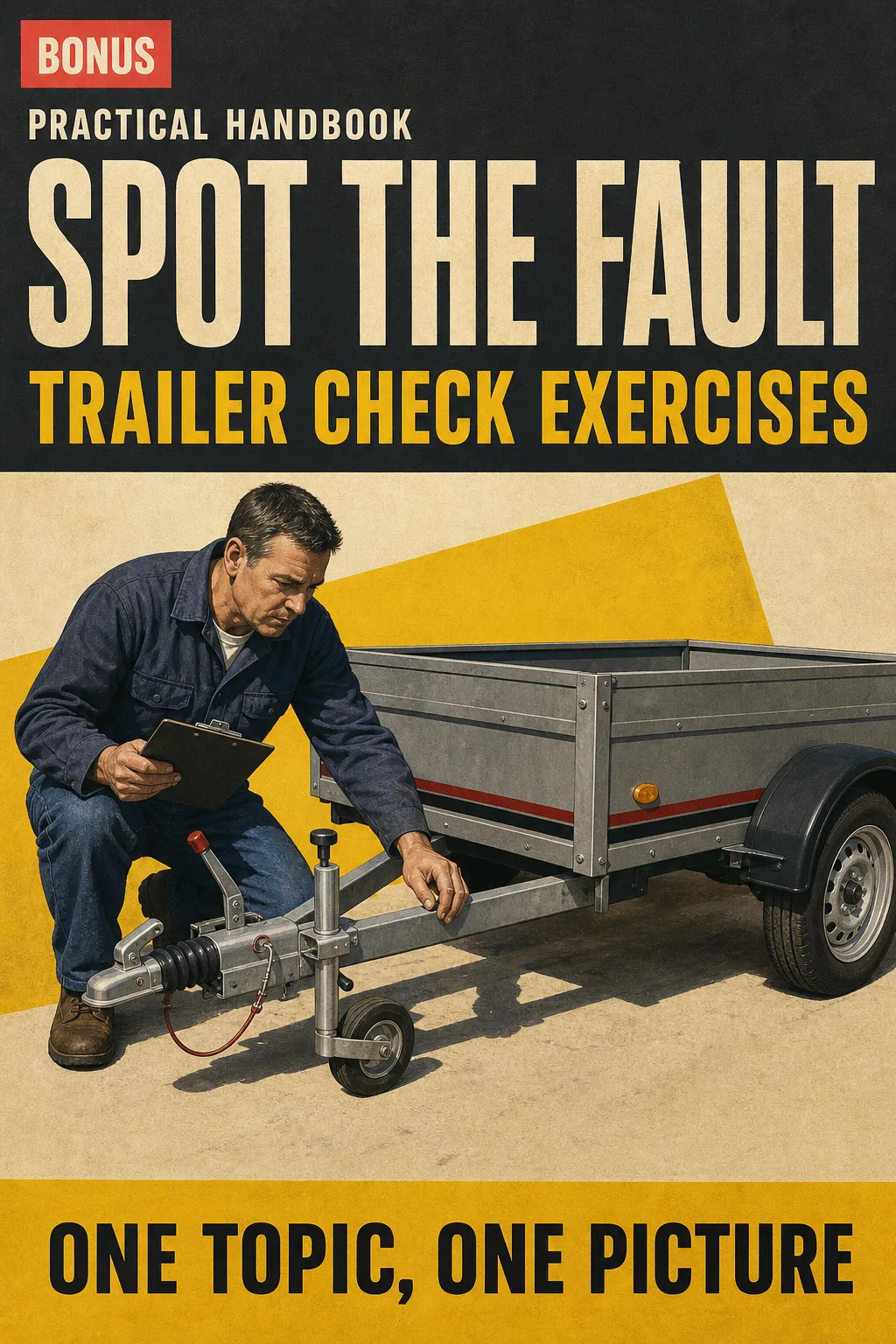
Spot the Fault: Trailer Check Exercises

BONUS 1: «Spot the Fault: Trailer Check Exercises»

Value on its own: US$ 17.90

Drawn trailers with something wrong on each page (a worn ball, a slack breakaway cable, a perished tyre) so you practise spotting faults before they turn up on the road.

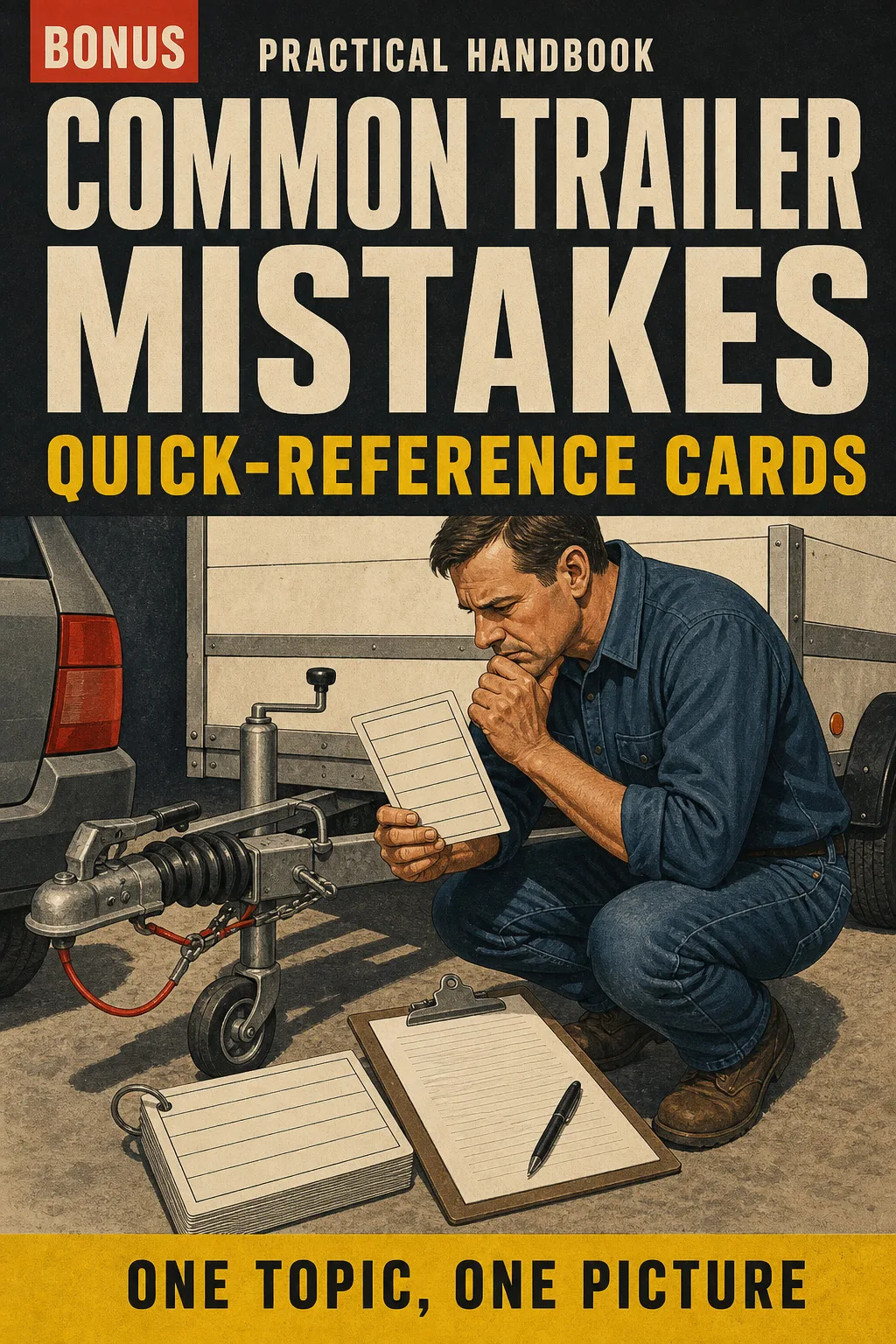
Common Trailer Mistakes: Quick-Reference Cards

BONUS 2: «Common Trailer Mistakes: Quick-Reference Cards»

Value on its own: US$ 14.90

The most frequent hitching, loading and maintenance mistakes, each drawn before and after on one card, to read at a glance before you set off.

Trailer & Towing Illustrated with 2 Free Books

  • Trailer & Towing Illustrated: 64 illustrated pagesUS$ 63
  • BONUS 1: Spot the Fault: Trailer Check ExercisesUS$ 17.90
  • BONUS 2: Common Trailer Mistakes: Quick-Reference CardsUS$ 14.90
  • High-resolution PDF to printIncluded
Total value US$ 95.80
YOUR PRICE:
US$ 27
You save US$ 68.80
YES, I WANT TRAILER & TOWING ILLUSTRATED FOR US$ 27

📄 This is a digital PDF book sent to your email: nothing is printed or shipped.

Secure purchaseEncrypted payment30-day guarantee

PDF by email: We email you Trailer & Towing Illustrated as a PDF, together with the two free books. It's a single payment: no installments, no extra charges.

Who This Book Is For

You take the horses, the boat or the car out at weekends

You take the horses, the boat or the car out at weekends

Your type of trailer has its own pages, plus the hitching routine and the pre-trip check drawn in the same order every time.

Your first trip of the season is coming

Your first trip of the season is coming

The first-trip-after-winter page, the bearing check and the pre-trip check in order, so you set off on Saturday without second-guessing the hitch.

You tow for work every day

You tow for work every day

A walk-round you can do in the same order every morning, plus tyre and torque sheets to print and keep in the van.

Everything You Get Today

US$ 95.80US$ 27
YES, I WANT TRAILER & TOWING ILLUSTRATED FOR US$ 27

📄 This is a digital PDF book sent to your email: nothing is printed or shipped.

30DAYS
GUARANTEE

30-Day Guarantee

Try Trailer & Towing Illustrated for 30 days, bonus books included.

We refund everything if the file won't open, if the book isn't what you see here, if you were charged twice or if the email doesn't arrive. Just email us.

You pay once. No subscriptions.

Frequently Asked Questions

Is it for me if I've been towing for years?

Yes. It isn't a beginner's course: it's a reference with every check in the same order, drawn, to keep in the garage. Part 8 has its own pages for boat, horse, car transporter and plant trailers, and the rules are the UK ones.

Where does the content come from?

It's checked against current UK towing guidance on GOV.UK, The Highway Code and DVSA guidance on loading and towing. Tyre pressures and wheel nut torque depend on your trailer: the book shows where to find your own figures (the plate, the tyre sidewall, the handbook), marks any general value as general, and gives you a sheet to write yours down.

Is it official material?

No. It's an independent illustrated guide, not affiliated with any government body or trailer manufacturer.

Does it replace towing training or a professional service?

No. It doesn't replace towing training, a professional trailer service or your trailer and towbar manufacturer's handbook. It helps you understand and organise the checks you do yourself.

Are the Spot the Fault exercises from an official check?

No. They're written for this book, so you can practise spotting faults on drawn trailers. They aren't questions from any official test or roadside check.

When and how will I get it?

As a PDF by email, to the address you give at checkout. The 2 gift books come with it.

Do I have to pay every month?

No. It's a single payment, with no subscription.

Can I have it on paper?

Yes. Print it at home or at a print shop and keep it in the garage or the tow car.

How does the refund work?

You have 30 days. We refund everything if the file won't open, if the book isn't what you see on this page, if you were charged twice or if the email doesn't arrive: just email us.

Before You Close This Page

No more rereading the manual without it sinking in.

The breakaway cable, the bearings, the nose weight: you see them drawn, and it clicks.

You set off knowing where everything is.

Drawings make studying faster.

The book is right below.

One-time payment: US$ 27 · Guarantee: 30 days · PDF by email

YES, I WANT TRAILER & TOWING ILLUSTRATED FOR US$ 27

📄 This is a digital PDF book sent to your email: nothing is printed or shipped.